
Guides
Driveway Cleaning After Freeze-Thaw Damage in Strongsville: What Homeowners Should Know
Published · Westlake Window Cleaners
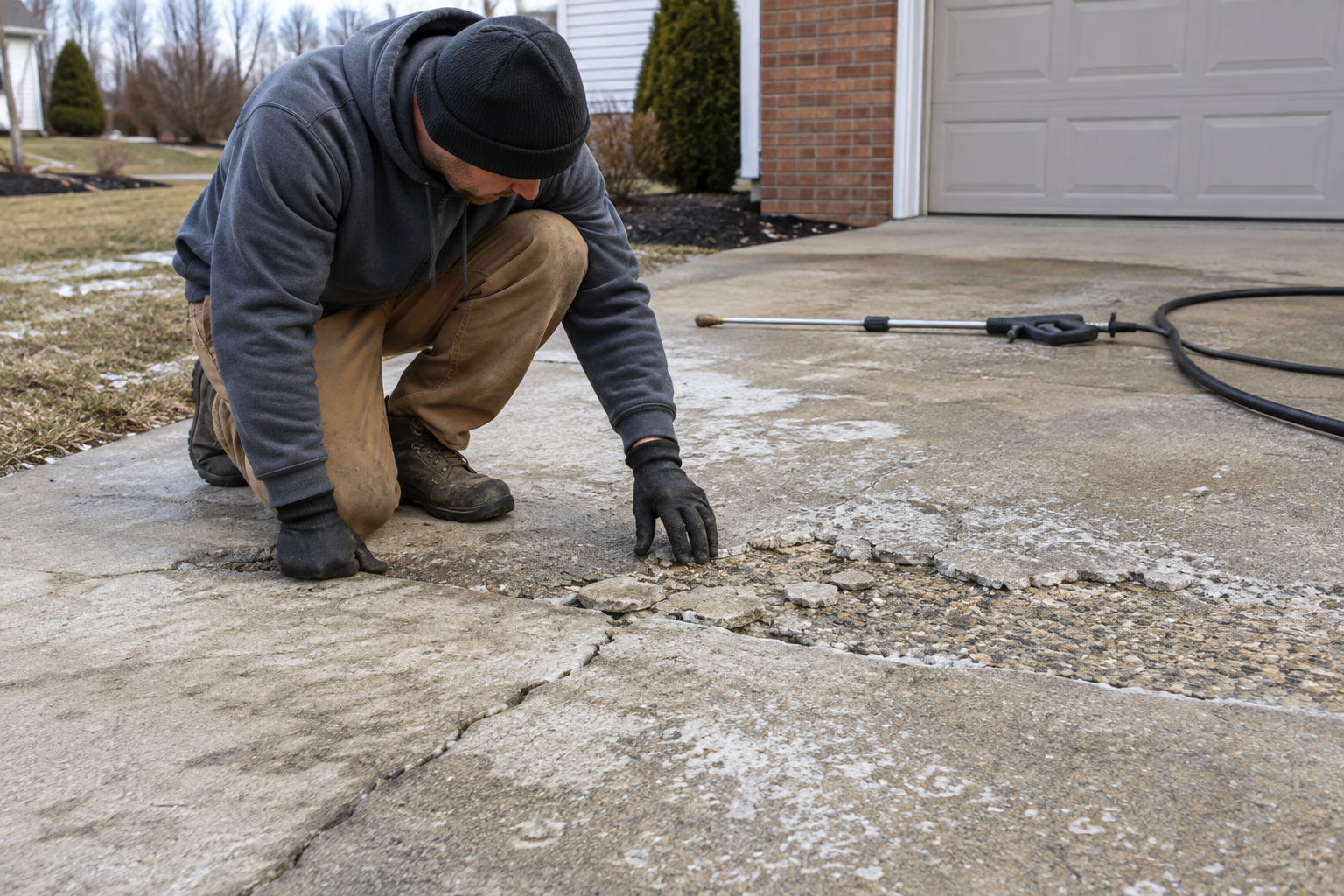
Driveway cleaning after freeze-thaw damage starts with checking the surface, not choosing the strongest pressure washer setting. In Strongsville, winter weather can leave concrete cracked, flaking, or weakened, so the right approach may involve gentler cleaning—or postponing washing until damaged areas are evaluated.
How does freeze-thaw damage affect driveway cleaning?
Freeze-thaw damage can make a driveway more vulnerable to pressure washing because water freezing inside pores and cracks can weaken the surface. Cleaning may remove dirt and winter residue, but it cannot restore concrete that has already broken apart.
When moisture enters concrete and freezes, it expands. Repeated freezing and thawing can contribute to cracking, surface scaling, and spalling, especially where water collects or the surface is already deteriorating.
These conditions matter because a concentrated stream of water can dislodge loose material. A driveway that looks merely dirty may have a fragile top layer hidden beneath grime, salt residue, or debris.
Cleaning is not a structural repair. Removing buildup can make damage easier to see, but cracks, missing concrete, and drainage problems need separate attention.
What should Strongsville homeowners check before pressure washing?
Before scheduling driveway cleaning, inspect the driveway for loose concrete, widening cracks, uneven slabs, and places where water stands. Visible deterioration should guide whether cleaning proceeds, is modified, or waits for a repair assessment.
A spring inspection is useful after snow and ice have cleared. Homeowners in nearby Brunswick and North Royalton can use the same checklist before washing away winter buildup.
Look over the surface in daylight, when it is dry enough to distinguish stains from damaged areas:
- Check for thin flakes peeling away from the concrete surface.
- Look for small pits, crumbling edges, or exposed aggregate.
- Note cracks with loose material or changing width.
- Watch for settled sections, raised edges, or uneven joints.
- Identify puddles or downspout discharge that repeatedly wets the driveway.
- Check whether a sealer or coating is peeling or worn unevenly.
Share these observations when discussing service. If a slab has shifted, a crack is widening, or concrete is breaking apart, a qualified concrete professional should assess it before pressure washing proceeds.
How can cleaning methods reduce the risk of further damage?
A condition-based cleaning plan reduces risk by matching the equipment, cleaning solution, and technique to the driveway surface. Higher pressure is not automatically better, particularly when winter has weakened the concrete.
Start with loose debris removal and a small test area. Appropriate cleaning products can help loosen buildup so the work does not depend entirely on force, but products must suit the driveway material and any existing coating.
For pressure washing, nozzle selection, working distance, and consistent movement all matter. Holding a concentrated spray close to one spot can damage concrete, and even a surface-cleaning attachment requires careful operation on deteriorated areas.
Westlake Window Cleaners offers driveway cleaning, pressure washing, and soft washing. When discussing these services, ask which approach fits the driveway’s condition rather than assuming every surface should receive the same treatment.
Soft washing is not automatically the answer for every damaged driveway, either. Lower pressure does not repair unstable concrete, and cleaning solutions still require appropriate application, runoff control, and protection for nearby landscaping.
When is the right time to clean after winter?
Choose a period when the driveway is thawed and temperatures are expected to remain above freezing during cleaning and drying. Avoid washing when runoff or remaining moisture could freeze on the driveway or nearby walking surfaces.
Northeast Ohio weather can shift quickly, so one warm afternoon does not necessarily provide a suitable cleaning window. Consider overnight temperatures, shaded areas, and how readily the driveway drains.
If repairs are needed, coordinate their timing with cleaning. Repair materials, newly placed concrete, and sealers may have specific curing or cleaning restrictions that should come from the product manufacturer or installer.
Avoid making sealing an automatic next step immediately after washing. The surface must be appropriately prepared and dry, and any proposed sealer should be compatible with the concrete and existing treatments.
Frequently Asked Questions
Driveway cleaning after winter depends on the surface condition and the weather, not just how dirty the driveway looks. These answers clarify common concerns before scheduling service.
Can pressure washing make freeze-thaw damage worse?
Yes. Excessive pressure or poor technique can remove weakened concrete and aggravate deteriorated areas. An inspection and test cleaning help determine whether washing is appropriate, but visibly unstable concrete may need repair evaluation first.
Will driveway cleaning remove winter salt residue?
Cleaning can help remove surface residue and accumulated grime. It does not reverse deterioration that has already occurred, and runoff should be managed to protect nearby plants and avoid creating slippery or icy areas.
Should cracked concrete be repaired before cleaning?
That depends on the crack and surrounding surface. Loose material, uneven slabs, and active deterioration warrant evaluation before washing; minor, stable cracks still need to be considered when choosing the cleaning method.
Planning driveway cleaning in Strongsville? Contact Westlake Window Cleaners to discuss your driveway’s condition and available driveway cleaning services. Mention winter flaking, cracks, drainage concerns, or existing coatings so the conversation starts with the surface’s needs.